Food
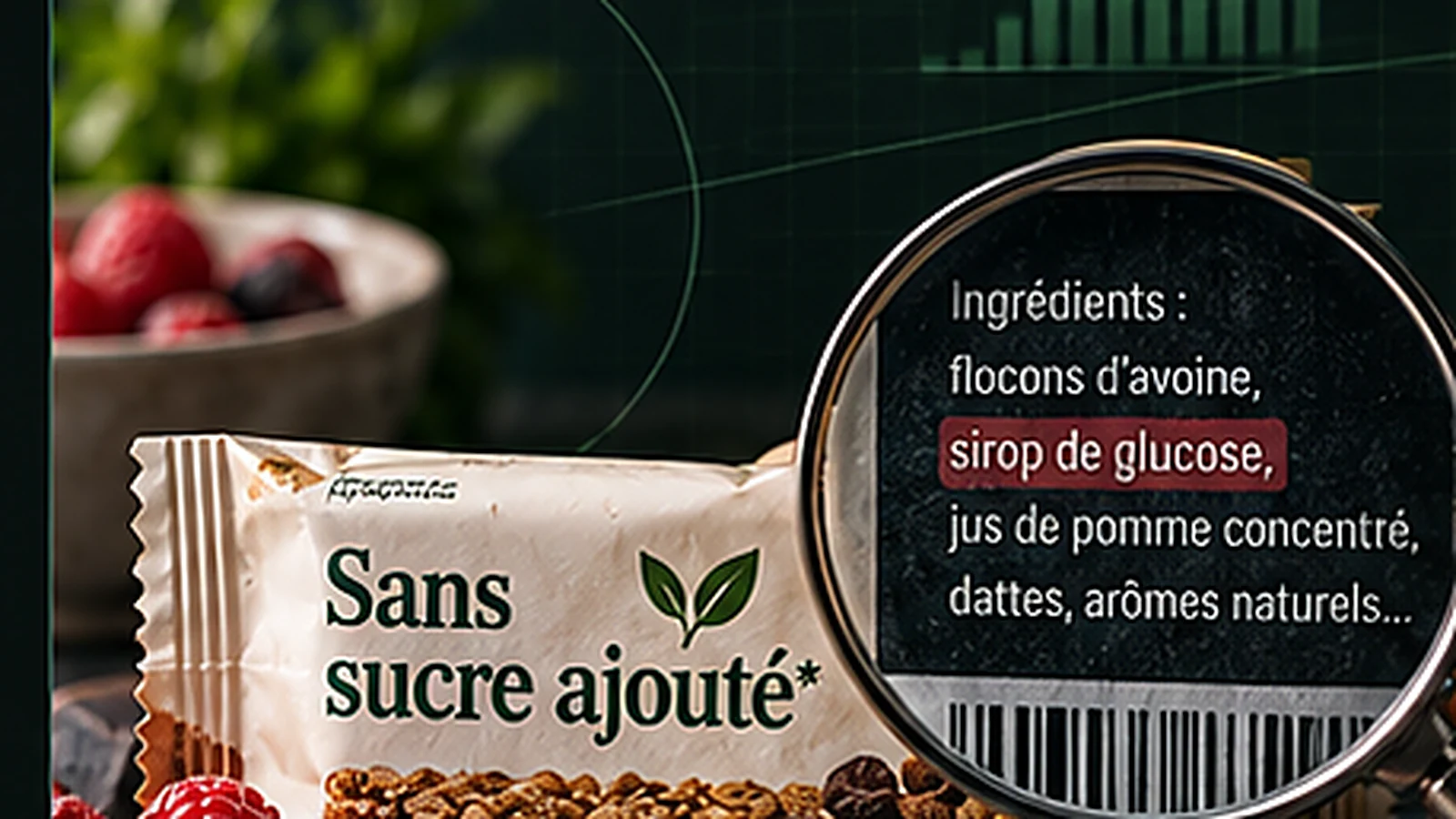
No added sugar is not the same as sugar-free
An on-pack claim describes a specific condition. It is not a substitute for the nutrition table or an assessment of the product as a whole.
Sources consulted on 2026-09-15
Context
A regulated claim, not a nutritional verdict
In the European Union, Regulation 1924/2006 sets conditions for the claim "with no added sugars". In particular, the product must not contain added monosaccharides, disaccharides or other food used for its sweetening properties.
That does not establish that the product is low in sugar or energy, or suitable for every dietary need.
Consensus
Naturally occurring sugars still count
A product can contain sugars that were not added. The regulation provides for a statement about naturally occurring sugars when applicable. The "of which sugars" line in the nutrition table helps identify the total amount.
"Sugars-free" is a different claim: it requires no more than 0.5 g of sugars per 100 g or 100 ml. It is not a synonym for "no added sugars".
Controversy
The wider message can mislead
The French consumer authority DGCCRF stresses that nutrition and health claims must not mislead consumers. Prominent packaging can draw attention to one property while distracting from the overall composition.
Additional provisions can apply to specific product categories. A general explainer does not replace checking the rules for the particular food.
Consequences
Comparisons need a common basis
Different portion sizes or concentrations can make front-of-pack comparisons unreliable. Compare similar foods per 100 g or 100 ml first, then consider how much is actually consumed.
Sugar alone is not a complete nutritional assessment. Other nutrients and the product's role within a varied diet matter too.
Guidance
Read three things, not one slogan
Read the precise claim, the nutrition table and the ingredients list. Compare products of a similar nature rather than directly comparing a dry food with a drink.
For a medical condition or prescribed diet, general label-reading information is not individual advice. The aim here is to interpret a claim, not to classify every food as good or bad.
LES5C / 05
The essentials, not the last word
No added sugars describes a specific condition. Total sugars, the portion consumed and the rest of the composition still need attention.
This overview is neither exhaustive nor personal advice. Limitations and sources are part of the argument.
Keep exploring