Food
What does Nutri-Score actually tell you about a food
Nutri-Score summarizes selected nutritional characteristics to make product comparison easier. It does not capture every dimension of a food or of your overall diet.
Sources consulted on 2026-09-15
Context
A deliberately compact nutrition summary
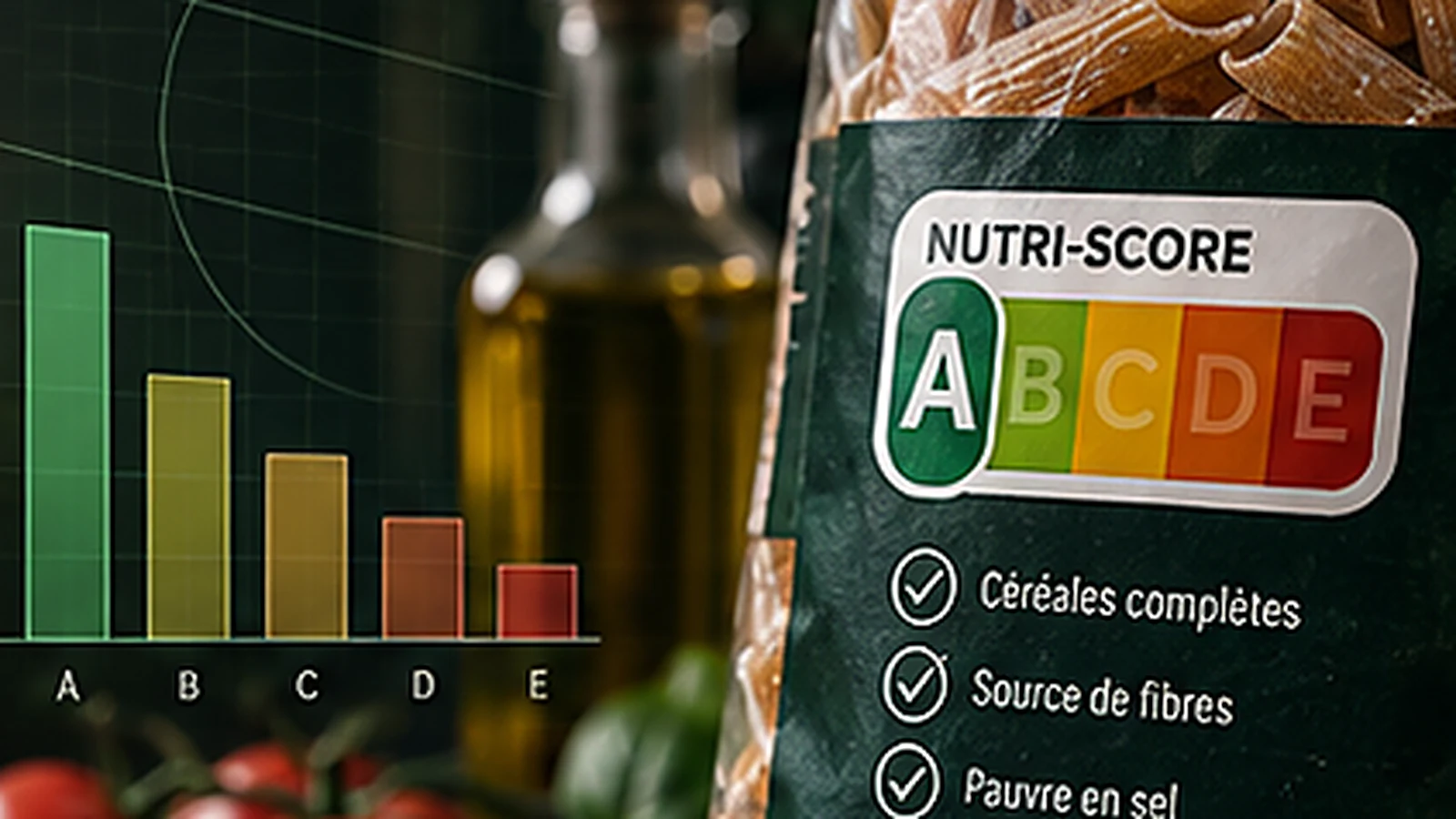
Nutri-Score combines several nutritional components into a letter and color through a defined algorithm. Its purpose is faster comparison at the point of choice. Like every summary indicator, it intentionally compresses richer information that still exists on the label.
Consensus
The algorithm has been revised to improve distinctions
The calculation has evolved to differentiate several food categories more effectively in line with public-health knowledge and objectives. That also shows that a score is not immutable truth: methodology can change as evidence and priorities develop.
Controversy
Two foods with the same score can remain very different
The score does not describe every ingredient, possible contaminant, allergy, origin, price, environmental effect or cultural context. It also does not say how much you will eat. Foods with the same letter can therefore play very different roles.
LES5C / 05
The essentials, not the last word
Nutri-Score is most useful for comparing similar products. Combine it with ingredients, the portion you actually eat, processing and the food’s place in the whole dietary pattern.
This overview is neither exhaustive nor personal advice. Limitations and sources are part of the argument.
Keep exploring