Technology
Do two identical-looking USB-C cables really do the same thing
USB-C first describes the connector shape. Power, data speed, video and USB4 support then depend on the cable and the devices at both ends.
Sources consulted on 2026-09-15
Context
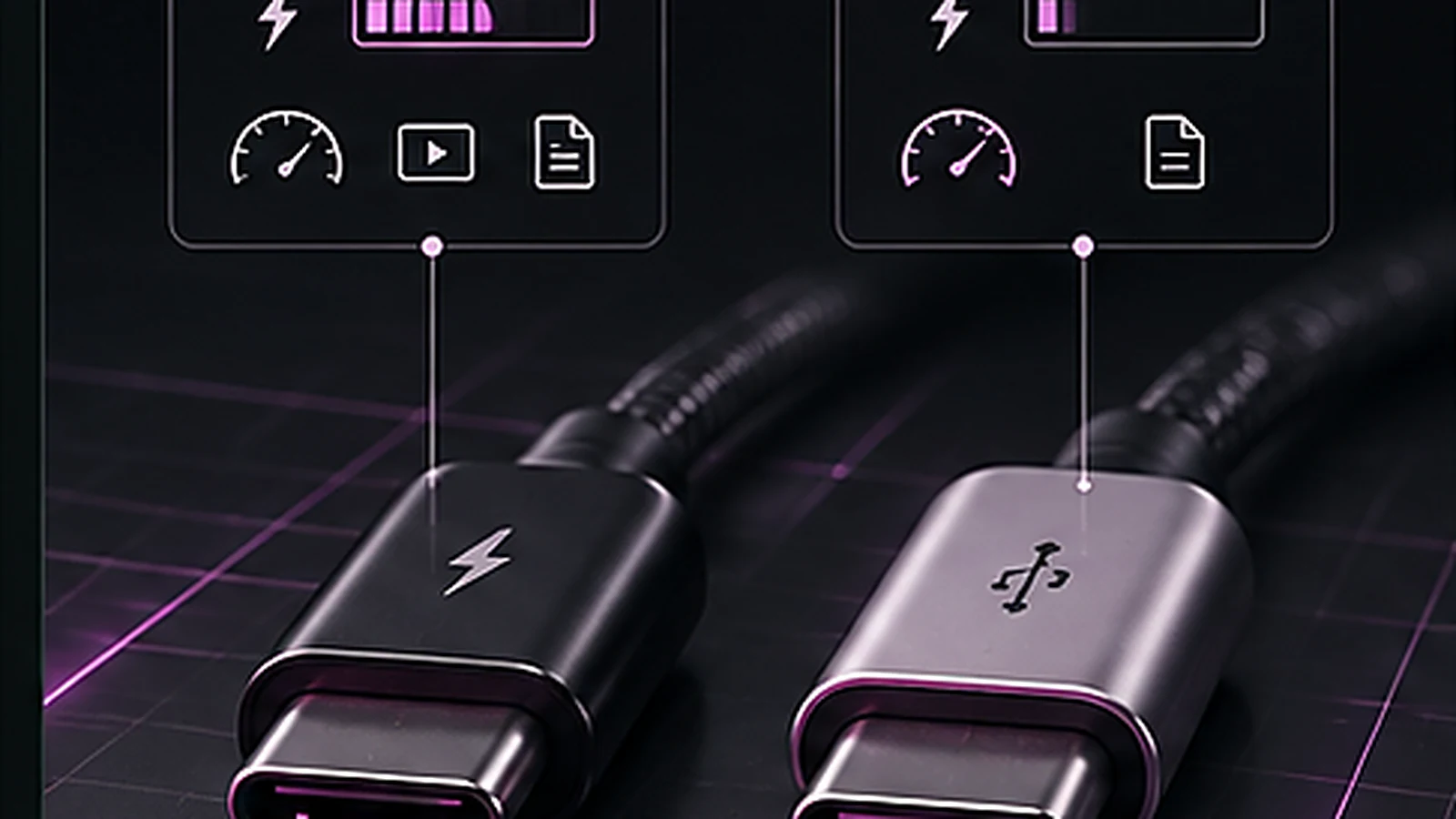
USB-C describes a common connector shape
The reversible connector simplified the physical interface, but it can carry several protocols and power levels. Two cables that fit the same socket can therefore be designed for very different tasks. A common plug does not guarantee a common feature set.
Consensus
Power depends on cable and charger capabilities
USB Power Delivery supports several power levels, but the cable has to be rated for the required current and the devices must negotiate it correctly. A limited cable does not become more capable just because it is connected to a larger charger.
Consequences
Video adds another set of conditions
A USB-C port may or may not carry video depending on the device and supported modes. Even with a capable cable, the laptop or phone must provide the relevant function. Adapters and docks add another compatibility layer.
LES5C / 05
The essentials, not the last word
Check capabilities, not just the USB-C shape. For fast charging, displays or heavy transfers, verify power, data rate and compatible specifications across the cable, charger and device.
This overview is neither exhaustive nor personal advice. Limitations and sources are part of the argument.
Keep exploring