Economics
What does purchasing power actually measure
Purchasing power compares disposable income with the price level. The average indicator is useful, but it cannot reproduce every household’s exact budget.
Sources consulted on 2026-09-15
Context
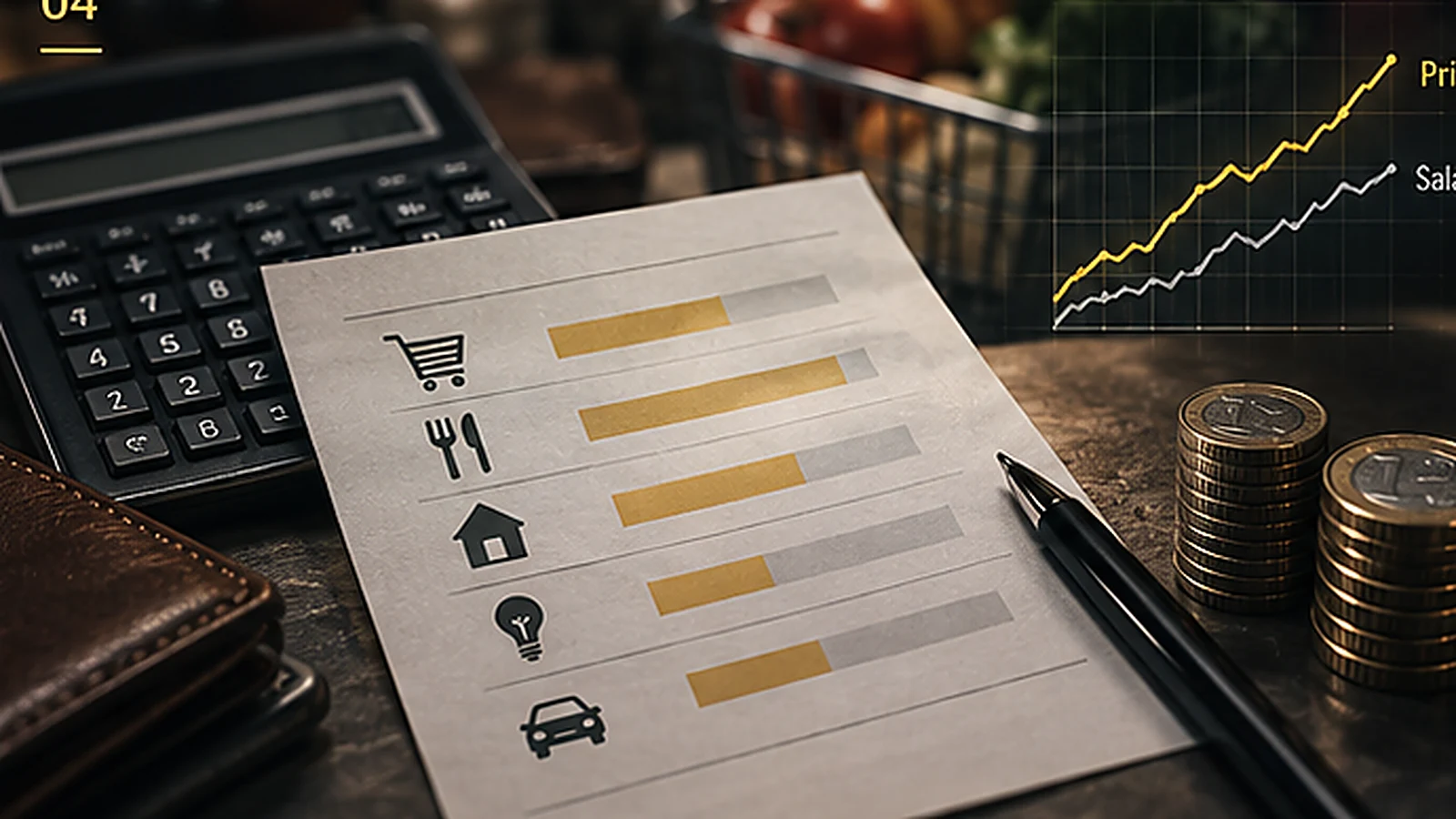
Purchasing power puts income and prices together
INSEE defines purchasing power as the quantity of goods and services that income can buy. Its change therefore depends on both disposable income and prices. If income rises less than prices, purchasing power can fall; if it rises more, it can increase.
Consensus
The aggregate is not your bank statement
Statistics may track all households or adjust for persons or consumption units. They describe an average or aggregate and are not designed to reproduce every household’s experience exactly.
Consequences
Household size matters
The same increase in total income means something different if household composition changes. Measures per consumption unit try to reflect economies of scale inside a household, producing a different view from total income alone.
LES5C / 05
The essentials, not the last word
Purchasing power is a relationship between resources and prices, not a feeling at the checkout. To understand your own situation, add household composition, income sources and your real spending basket to the national average.
This overview is neither exhaustive nor personal advice. Limitations and sources are part of the argument.
Keep exploring